Tax Season 2018

33627520581_39a17f0720_oThis is a very different year and confusion surrounding taxes seems to be at an all-time high. I’m writing not only because tax season is on its way, but to tell you that I am here to help.

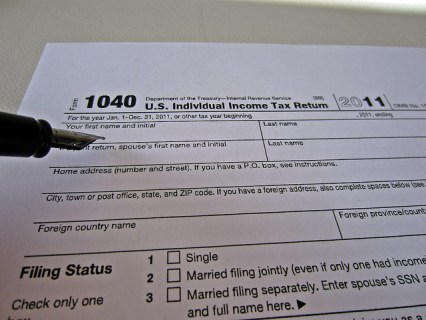
I am now accepting appointments in my home office for tax preparation.
Call: 845-986-6158 or email: joemartintax@gmail.com to schedule your appointment. 

You can do your taxes via Facetime / email and pay online via Paypal.

You can also process with me by mail.

→$10 credit for using Facetime, email, or postal preparation.

→$10 credit to any client who refers new clients to my business.

As always, I’m also happy continue to meet with you in-person.

I am very grateful to all of you who have already referred your friends and family.

Speaking of family, my daughter, Emily, will be working with me again this year. She is a certified tax preparer and excited to start her 3rd year in the family business.

The return price varies depending on the service. This year the average charge for most returns will be $200.00 long form and $80.00 short form.

**Please remember that due to new IRS security regulations, you need to supply a copy of your driver’s license for me to submit with your tax return**

The 10 Most Outrageous Tax Deductions of 2017

6736180389_013f2b1826_z
Deducing your deductions

The folks over at Accounting Today have discovered some pretty interesting deductions. I would not recommend any of these. All of these deductions are taken from a survey given to the Minnesota Society of CPAs to find the wackiest deductions people have tried to get away with in the past few years.

  1. Riding Lawnmower – A Real Estate agent claimed he needed this one–not sold.
  2. Hunting Property – The owner of a sporting goods store misfired with this one.
  3. Pets – People have tried to claim them as dependents, but no dogs allowed!
  4. Pop-up camper – Someone tried to claim this as a construction trailer–tents don’t count!
  5. Graduation Party – Congratulations, but not even though your business contacts may be present at your son or daughter’s event this is not a business expense. You get an F for file correctly!
  6. Winter coat and snow blower – A crafty new Minnesotan tried to claim these as moving expenses after transplanting from sunnier climes.
  7. Sturgis – Even if you wear your bike company t-shirt to the biggest ride of all, it’s still not a business expense, drive on.
  8. Grandchild’s tuition– While it may feel a lot like charity your grandkid’s school bill is not a deduction.
  9. Cosmetic enhancements– Nip, tuck those right off your forms because most trips to the salon, injectables, tanning and other beautification ops are generally not deductible, though many have tried.
  10. Chainsaw donation – One client tried to write-off a chainsaw donation to a children’s hospital, clearly going for an incorrect deduction was the least of his missteps.

2017 Tax Filing Season Begins Jan. 23 for Nation’s Taxpayers, Tax Returns due April 18


From the IRS: IR-2016-167, Dec. 9, 2016

WASHINGTON – The Internal Revenue Service announced today that the nation’s tax season will begin

6757835075_cf5e1c9b5a_z
Notice These IRS Notices

and reminded taxpayers claiming certain tax credits to expect a longer wait for refunds.

The IRS will begin accepting electronic tax returns that day, with more than 153 million individual tax returns expected to be filed in 2017. The IRS again expects more than four out of five tax returns will be prepared electronically using tax return preparation software.

Many software companies and tax professionals will be accepting tax returns before Jan. 23 and then will submit the returns when IRS systems open. The IRS will begin processing paper tax returns at the same time. There is no advantage to filing tax returns on paper in early January instead of waiting for the IRS to begin accepting e-filed returns.

The IRS reminds taxpayers that a new law requires the IRS to hold refunds claiming the Earned Income Tax Credit (EITC) and the Additional Child Tax Credit (ACTC) until Feb. 15. In addition, the IRS wants taxpayers to be aware it will take several days for these refunds to be released and processed through financial institutions. Factoring in weekends and the President’s Day holiday, the IRS cautions that many affected taxpayers may not have actual access to their refunds until the week of Feb. 27.

“For this tax season, it’s more important than ever for taxpayers to plan ahead,” IRS Commissioner John Koskinen said. “People should make sure they have their year-end tax statements in hand, and we encourage people to file as they normally would, including those claiming the credits affected by the refund delay. Even with these significant changes, IRS employees and the entire tax community will be working hard to make this a smooth filing season for taxpayers.”

The IRS also reminds taxpayers that they should keep copies of their prior-year tax returns for at least three years. Taxpayers who are changing tax software products this filing season will need their adjusted gross income from their 2015 tax return in order to file electronically. The Electronic Filing Pin is no longer an option. Taxpayers can visit IRS.Gov/GetReady for more tips on preparing to file their 2016 tax return.

April 18 Filing Deadline

The filing deadline to submit 2016 tax returns is Tuesday, April 18, 2017, rather than the traditional April 15 date. In 2017, April 15 falls on a Saturday, and this would usually move the filing deadline to the following Monday – April 17. However, Emancipation Day – a legal holiday in the District of Columbia – will be observed on that Monday, which pushes the nation’s filing deadline to Tuesday, April 18, 2017. Under the tax law, legal holidays in the District of Columbia affect the filing deadline across the nation.

“The opening of filing season reflects months and months of work by IRS employees,” Koskinen said. “This year, we had a number of important legislative changes to program into our systems, including the EITC refund date, as well as dealing with resource limitations. Our systems require extensive programming and testing beforehand to ensure we’re ready to accept and process more than 150 million returns.”

The IRS also has been working with the tax industry and state revenue departments as part of the Security Summit initiative to continue strengthening processing systems to protect taxpayers from identity theft and refund fraud. A number of new provisions are being added in 2017 to expand progress made during the past year.

Refunds in 2017

Choosing e-file and direct deposit for refunds remains the fastest and safest way to file an accurate income tax return and receive a refund.

The IRS still anticipates issuing more than nine out of 10 refunds in less than 21 days, but there are some important factors to keep in mind for taxpayers.

Beginning in 2017, a new law requires the IRS to hold refunds on tax returns claiming the Earned Income Tax Credit or the Additional Child Tax Credit until mid-February. Under the change required by Congress in the Protecting Americans from Tax Hikes (PATH) Act, the IRS must hold the entire refund — even the portion not associated with the EITC and ACTC — until at least Feb. 15. This change helps ensure that taxpayers get the refund they are owed by giving the IRS more time to help detect and prevent fraud.

As in past years, the IRS will begin accepting and processing tax returns once the filing season begins. All taxpayers should file as usual, and tax return preparers should also submit returns as they normally do – including returns claiming EITC and ACTC.

The IRS will begin releasing EITC and ACTC refunds starting Feb. 15. However, the IRS cautions taxpayers that these refunds likely won’t arrive in bank accounts or on debit cards until the week of Feb. 27 (assuming there are no processing issues with the tax return and the taxpayer chose direct deposit). This additional period is due to several factors, including banking and financial systems needing time to process deposits.

After refunds leave the IRS, it takes additional time for them to be processed and for financial institutions to accept and deposit the refunds to bank accounts and products. The IRS reminds taxpayers many financial institutions do not process payments on weekends or holidays, which can affect when refunds reach taxpayers. For EITC and ACTC filers, the three-day holiday weekend involving President’s Day may affect their refund timing.

Where’s My Refund? ‎on IRS.gov and the IRS2Go phone app will be updated with projected deposit dates for early EITC and ACTC refund filers a few days after Feb. 15. Taxpayers will not see a refund date on Where’s My Refund? ‎or through their software packages until then. The IRS, tax preparers and tax software will not have additional information on refund dates, so Where’s My Refund? remains the best way to check the status of a refund.

IRS Offers Tips for Year-End Giving

WASHINGTON — Individuals and businesses making contributions to charity should keep in mind several important tax law provisions that have taken effect in recent years. Some of these changes include the following:

Special Tax-Free Charitable Distributions for Certain IRA Owners

This provision, currently scheduled to expire at the end of 2013, offers older owners of individual retirement arrangements (IRAs) a different way to give to charity. An IRA owner, age 70½ or over, can directly transfer tax-free up to $100,000 per year to an eligible charity. This option, first available in 2006, can be used for distributions from IRAs, regardless of whether the owners itemize their deductions. Distributions from employer-sponsored retirement plans, including SIMPLE IRAs and simplified employee pension (SEP) plans, are not eligible.

To qualify, the funds must be transferred directly by the IRA trustee to the eligible charity. Distributed amounts may be excluded from the IRA owner’s income — resulting in lower taxable income for the IRA owner. However, if the IRA owner excludes the distribution from income, no deduction, such as a charitable contribution deduction on Schedule A, may be taken for the distributed amount.

Not all charities are eligible. For example, donor-advised funds and supporting organizations are not eligible recipients.

Amounts transferred to a charity from an IRA are counted in determining whether the owner has met the IRA’s required minimum distribution. Where individuals have made nondeductible contributions to their traditional IRAs, a special rule treats amounts distributed to charities as coming first from taxable funds, instead of proportionately from taxable and nontaxable funds, as would be the case with regular distributions. See Publication 590, Individual Retirement Arrangements (IRAs), for more information on qualified charitable distributions.

Rules for Charitable Contributions of Clothing and Household Items

To be tax-deductible, clothing and household items donated to charity generally must be in good used condition or better. A clothing or household item for which a taxpayer claims a deduction of over $500 does not have to meet this standard if the taxpayer includes a qualified appraisal of the item with the return.

Donors must get a written acknowledgement from the charity for all gifts worth $250 or more that includes, among other things, a description of the items contributed. Household items include furniture, furnishings, electronics, appliances and linens.

Guidelines for Monetary Donations

To deduct any charitable donation of money, regardless of amount, a taxpayer must have a bank record or a written communication from the charity showing the name of the charity and the date and amount of the contribution. Bank records include canceled checks, bank or credit union statements, and credit card statements. Bank or credit union statements should show the name of the charity, the date, and the amount paid. Credit card statements should show the name of the charity, the date, and the transaction posting date.

Donations of money include those made in cash or by check, electronic funds transfer, credit card and payroll deduction. For payroll deductions, the taxpayer should retain a pay stub, a Form W-2 wage statement or other document furnished by the employer showing the total amount withheld for charity, along with the pledge card showing the name of the charity.

These requirements for the deduction of monetary donations do not change the long-standing requirement that a taxpayer obtain an acknowledgment from a charity for each deductible donation (either money or property) of $250 or more. However, one statement containing all of the required information may meet both requirements.

Reminders

To help taxpayers plan their holiday-season and year-end giving, the IRS offers the following additional reminders:

  • Contributions are deductible in the year made. Thus, donations charged to a credit card before the end of 2013 count for 2013. This is true even if the credit card bill isn’t paid until 2014. Also, checks count for 2013 as long as they are mailed in 2013.
  • Check that the organization is eligible. Only donations to eligible organizations are tax-deductible. Exempt Organization Select Check, a searchable online database available on IRS.gov, lists most organizations that are eligible to receive deductible contributions. In addition, churches, synagogues, temples, mosques and government agencies are eligible to receive deductible donations, even if they are not listed in the database.
  • For individuals, only taxpayers who itemize their deductions on Form 1040 Schedule A can claim deductions for charitable contributions. This deduction is not available to individuals who choose the standard deduction, including anyone who files a short form (Form 1040A or1040EZ). A taxpayer will have a tax savings only if the total itemized deductions (mortgage interest, charitable contributions, state and local taxes, etc.) exceed the standard deduction. Use the 2013 Form 1040 Schedule A to determine whether itemizing is better than claiming the standard deduction.
  • For all donations of property, including clothing and household items, get from the charity, if possible, a receipt that includes the name of the charity, date of the contribution, and a reasonably-detailed description of the donated property. If a donation is left at a charity’s unattended drop site, keep a written record of the donation that includes this information, as well as the fair market value of the property at the time of the donation and the method used to determine that value. Additional rules apply for a contribution of $250 or more.
  • The deduction for a car, boat or airplane donated to charity is usually limited to the gross proceeds from its sale. This rule applies if the claimed value is more than $500. Form 1098-C or a similar statement, must be provided to the donor by the organization and attached to the donor’s tax return.
  • If the amount of a taxpayer’s deduction for all noncash contributions is over $500, a properly-completed Form 8283 must be submitted with the tax return.
  • And, as always it’s important to keep good records and receipts.